Guide
Buying jewelry as a gift for a child
The lead rules that apply below the age of twelve, the parts that come off, and the pieces that are a bad idea whatever the label says.

Jewelry is an easy gift for a child and a surprisingly regulated one. The rules that apply below the age of twelve are stricter than the rules for adult jewelry, and they exist because small metal objects end up in mouths.
This guide covers what the rules say, what they do not cover, and how to choose something that actually gets worn.
The lead limit, and the age it applies to
The Consumer Product Safety Commission limits lead in products meant for children, and the age line falls at twelve:
products designed or intended primarily for children 12 and younger may not contain more than 600 ppm of lead
U.S. Consumer Product Safety Commission, 16 CFR 1500.87, Children's products containing lead: inaccessible component parts
That figure opened a schedule that tightened afterwards. For a buyer the number matters less than the phrase before it: the limit attaches to products designed or intended primarily for children. That describes who the product is for, not who happens to receive it.
A brooch designed for an adult and given to a nine year old is not a children's product in the eyes of the rule. Nobody tested it against that limit, and giving it away changes nothing.
The same section explains why a sealed part is treated differently from an exposed one:
a component part is not accessible if it is not physically exposed by reason of a sealed covering or casing
U.S. Consumer Product Safety Commission, 16 CFR 1500.87, Children's products containing lead: inaccessible component parts
In jewelry that distinction is thin. A clasp sits in the open. So does a stone in a prong setting. Almost nothing on a necklace hides inside a casing, so laboratories test children's jewelry whole rather than part by part.
What is suitable at what age
For anything under three the honest answer is nothing with small parts. Below that age a child puts everything in the mouth, and a bead that leaves a chain is exactly the size the standards describe.
- Under three: no jewelry with beads, stones or clasps. The piece is fine. The failure mode is choking.
- Three to seven: a single solid piece with no stones to lose. A plain pendant on a short chain, worn for an occasion rather than to school.
- Eight to twelve: most of the range works, and the piece that gets worn is the one with a motif they chose themselves.
- Piercings: a separate matter entirely, and one for the studio that made the piercing rather than for a catalogue.
The last one deserves plain words. Body jewelry is not a gift for a child, and the pieces here sized in gauges suit adults with healed piercings.
Simple pendants and chains
See all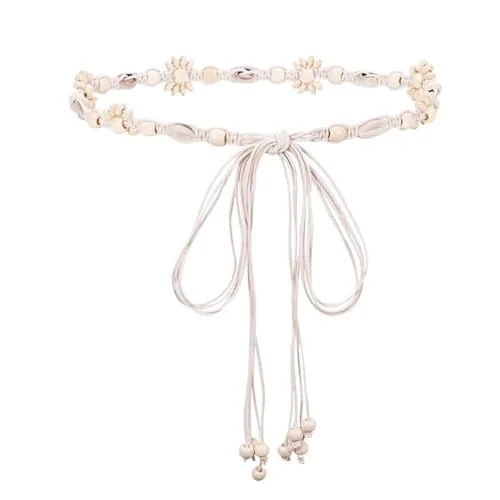

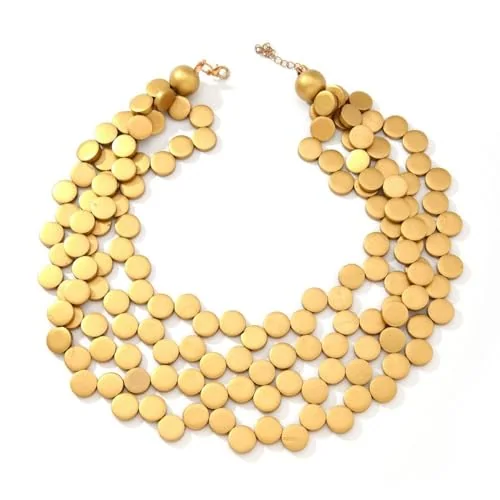
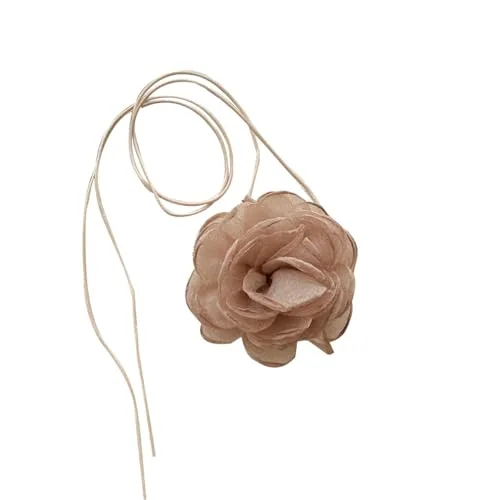
The motif is what makes it worn
A child wears a piece for one reason: it shows something they like. Adults buy metal and stone. Children buy the animal on it.
That is why this catalogue puts the motif on every card. 9 motifs run through the range, and the counted list is below. A cat, a bee and a star are three different gifts, and the child already knows which one they are.
| Motif | Pieces |
|---|---|
| Flower | 92 |
| Bird | 18 |
| Insect | 22 |
| Animal | 20 |
| Heart | 44 |
| Star and moon | 42 |
| Bow and ribbon | 13 |
| Geometric | 91 |
| Vintage | 37 |
The second thing that decides whether a piece is worn is whether it can be put on alone. A lobster clasp is difficult for small hands, a magnetic clasp is easy and comes undone, and a piece with no clasp at all is the one that survives.

Metal, for a wearer who does not take it off
Children do not take jewelry off to wash their hands, to swim, or to sleep. That turns an occasional piece into a daily one, and the metal has to match that.
Stainless steel is the answer for almost every case, and 119 pieces here state it. It survives chlorine, it survives sweat, and it does not leave a mark. Sterling silver is the second answer and needs polishing.
Plated brass suits a child who wears a piece constantly least of all. At that rate the plating goes within weeks, and the green mark then shows on a wrist rather than under a ring where nobody looks.
None of that rules a plated piece out as a gift. It points the piece at a coat, a bag or a party rather than at the school week.
Skin reactions in children
Nickel sensitivity often starts in childhood and it starts with cheap earrings in a fresh piercing. Once it starts it lasts for life, which makes the first pair of earrings a decision worth taking seriously.
The pattern to recognise is simple. Redness and itching under the piece rather than around it, appearing a day or two after wear and clearing within a week of taking it off. That is contact dermatitis, and the metal is the cause.
What helps is choosing the post material rather than choosing a brand claim. Surgical stainless steel with a stated grade, titanium, or solid gold above fourteen karat. What does not help is the word hypoallergenic, which no rule defines for jewelry.
A child who already reacts needs the same rule applied to everything, not only earrings. A necklace clasp sits against the back of the neck all day, and a bracelet sits where sweat collects.
What actually gets worn, by age
A gift that stays in a drawer is a gift that missed. Three patterns show up again and again.
Small children wear what they can put on themselves. That means no clasp, or a clasp large enough for fingers that are still learning. A bangle that slides on beats a bracelet that fastens, every time.
Older children wear what says something about them. A motif they chose, a colour they are in the middle of loving, a piece that matches a friend's. This is the age at which a set of three small pins outperforms one expensive pendant.
Teenagers wear what looks like adult jewelry rather than children's jewelry, and the fastest way to have a gift rejected is for it to look like it was chosen for a younger child. Plain metal, simple shapes, nothing cartoon.
Simple earrings
See all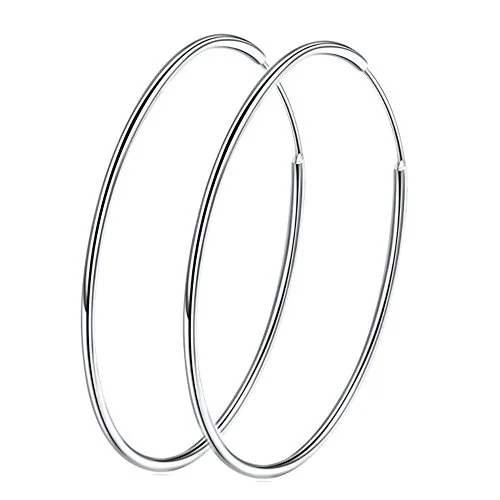
Large Hoop Earrings Sterling Silver 925 Circle Endless Basketball Earring
Sterling silver 4.2 out of 5 (4,299) $12.99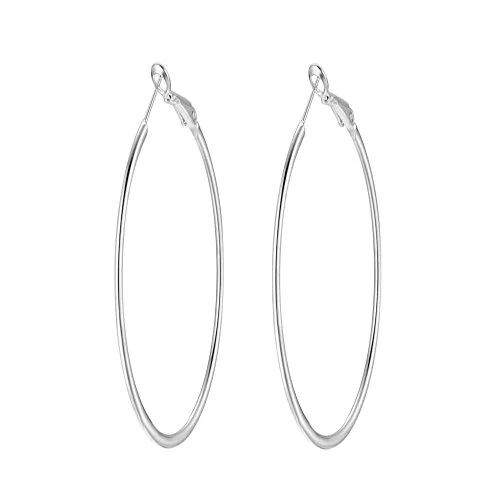
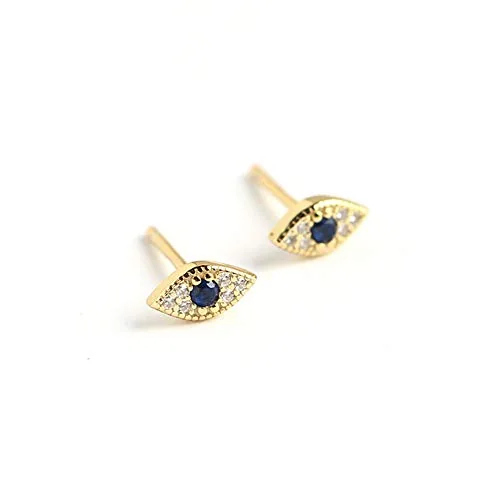
Dainty Evil Eye Mini Stud Earrings Sterling Silver Blue Crystal CZ Wedding
Sterling silver · Cubic zirconia 4.6 out of 5 (640) $11.99Buying it as a present
Three practical notes from the buying end, none of which is about the jewelry itself.
- Size is the risk with rings. Children's fingers change within a season. An open band that adjusts survives that. A fixed size does not.
- Length is the risk with necklaces. A chain sized for an adult sits at the wrong point on a child and gets tucked away.
- Packaging matters more than it should. A piece that arrives in a box is a present. The same piece in a bag is an afterthought, and children read the difference precisely.
The last one is the reason so much of the jewelry sold as a gift is sold in a box, and the reason a piece bought for a birthday is worth checking on that point before ordering.
Animal motifs
See all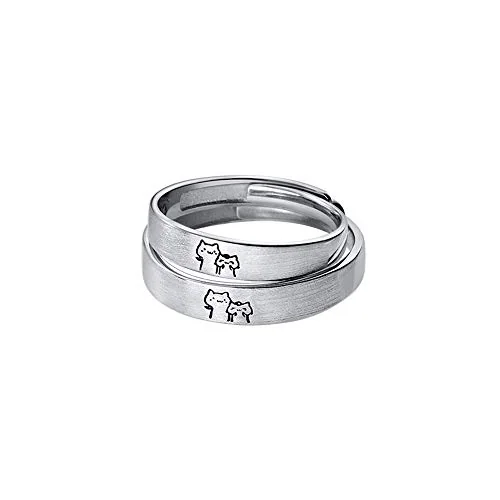
Lovely Cat His & Hers Couple Rings S925 Sterling Silver Adjustable Anniversary
Sterling silver 4.3 out of 5 (360) $29.99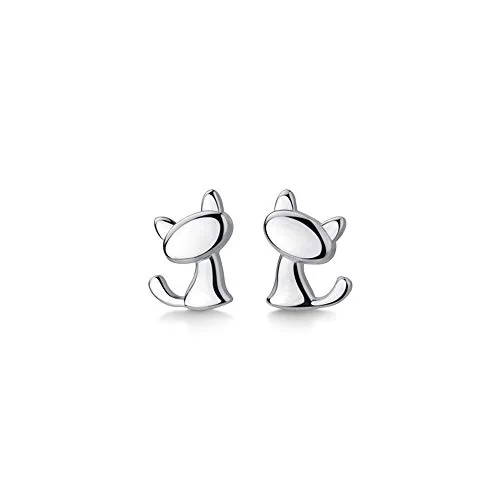
Cute Cat Stud Earrings S925 Sterling Silver Minimalist Lovely Pet Animal Tiny
Sterling silver 4.2 out of 5 (340) $8.99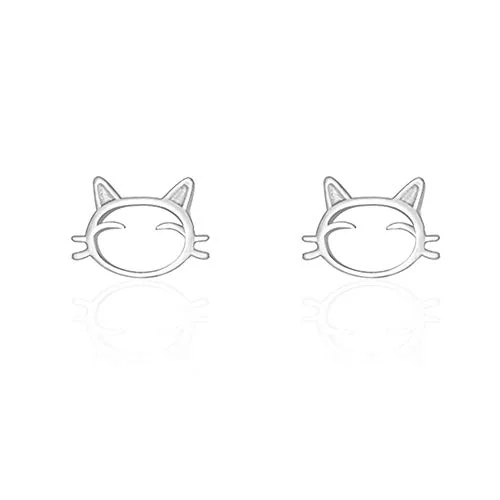
Tiny Cat Stud Earrings S925 Sterling Silver Minimalist Cute Animal Pet Small
Sterling silver 4.2 out of 5 (161) $8.99What to avoid, plainly
A short list, and each item on it comes from the way the piece fails rather than from a rule.
- Anything glued. A glued stone comes out, and it comes out at the worst possible size.
- Long chains on small children. Length is a snag hazard around playground equipment.
- Magnetic clasps and magnetic earrings for the very young. Two swallowed magnets is a surgical problem, not a stomach ache.
- Enamel on a piece that will be worn daily. It chips, and a chipped edge is sharp.
None of those means a piece is badly made. Each is a mismatch between how a maker built the piece and how a child will treat it, and that mismatch is the buyer's call.
The occasions a piece is actually bought for
Jewelry for children is bought at four moments, and each one wants something different.
A birthday wants a motif. This is the gift where the animal or the star matters more than the metal, and where a set of small pins does better than a single piece.
Christmas wants something seasonal that survives January. A snowflake pendant is worn for six weeks; a plain star is worn all year. The seasonal pieces in this range are gathered on their own page for that reason, and the honest note is that most of them are for the season rather than beyond it.
A first piercing wants the post metal and nothing else. That is the one occasion where design should come second, and where the studio's own advice outranks anything a catalogue says.
A milestone wants something that lasts, which at this price means stainless steel or sterling silver in a plain shape. Plating is the wrong choice for a piece meant to be kept.
The two-minute check before ordering
- Is the metal named? If not, treat the piece as unknown rather than as fine.
- Does anything come off? Beads, charms and glued stones are the parts that leave.
- Can they put it on alone? A clasp decides whether the piece is worn twice or fifty times.
- Is the size adjustable? Open bands and adjustable chains survive a growth spurt.
- Would they have chosen it? The motif is the whole gift for anyone under twelve.
Five questions, and the last one decides more than the other four together.
Where this goes next
The label guide covers what the metal and stone words are allowed to mean, and the guide on metal against skin covers what daily wear does to a plating and how to slow it down.
Sources we read
| Source | Published by | Read |
|---|---|---|
| 16 CFR 1500.87, Children's products containing lead: inaccessible component parts | U.S. Consumer Product Safety Commission | 5 September 2026 |