Guide
Metal against skin: brass, plating and the green mark
Why a ring leaves a green line, what plating actually is, which metals behave, and how to make a cheap piece last three years instead of three months.

The complaint people make about costume jewelry is almost always the same one. It looked right in the photograph, it looked right in the box, and after a month it left a green line on a finger or the colour wore off a chain. Neither is a defect. Both are the predictable behaviour of a coating over a base metal, and both can be slowed down a long way.
This guide is about what is actually happening, and what to do about it.
How thin plating is
The mental picture most people carry is of a metal object made of gold-coloured metal. The reality is a base metal object with a layer measured in microns on top. A micron is a thousandth of a millimetre.
The federal jewelry guides do not let a maker hide that. A plated piece has to say so:
is adequately qualified to indicate that the product or part is only surface-plated
Federal Trade Commission, 16 CFR Part 23, Guides for the Jewelry, Precious Metals, and Pewter Industries
They also name the specific trick of plating over a plating. If the gold layer is covered by a base metal and washed with gold again, the maker has to disclose it:
the layer of gold plating has been covered with a base metal (such as nickel), which is covered with a thin wash of gold
Federal Trade Commission, 16 CFR Part 23, Guides for the Jewelry, Precious Metals, and Pewter Industries
The practical consequence is simple. Wherever a plated piece rubs, the layer thins, and where it thins first is the underside of a ring, the back of a clasp and the inside of a bangle. Nothing brings it back. Re-plating exists, and it costs more than most costume pieces do.
Most rated in the range
See all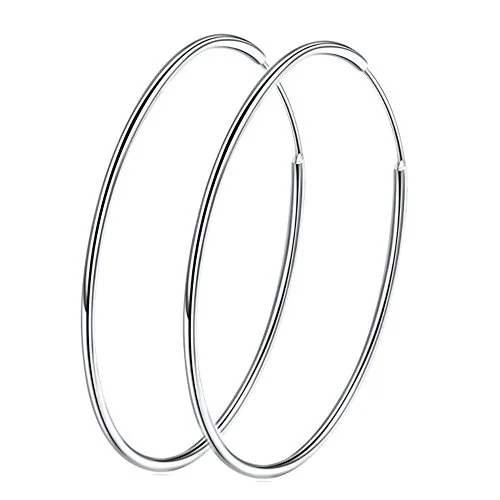

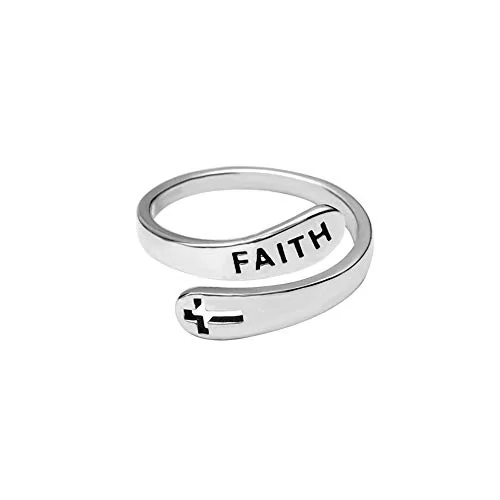
Faith Cross Sterling Silver Open Statement Rings Adjustable Minimalist Hope
Sterling silver 4.4 out of 5 (1,661) $18.99The green mark, explained
Green skin under a ring is a copper reaction. Copper in the alloy meets sweat and the fatty acids on skin, forms copper salts, and those salts are green. They wash off with soap and they stain nothing permanently.
Brass is copper and zinc, so brass does it. Bronze does it. Sterling silver contains copper for hardness, so a silver ring can do it on the right skin in the right weather. In this range 34 pieces state brass or copper.
Four things make it worse and each has an obvious counterpart: heat, moisture, acidity of your skin, and lotion or perfume trapped under the piece. Hot weather, hand washing with the ring on, and a hand cream applied before jewelry go on are the three most common causes.
The fixes are unglamorous and they work.
- Take rings off to wash hands, and let hands dry before putting them back.
- Jewelry last, perfume first. Anything sprayed or rubbed on goes on before the piece, not after.
- A coat of clear lacquer on the inside of a band buys months. Clear nail varnish is the household version and it needs redoing.
- Take it off overnight. Eight hours of dry air per day roughly doubles how long a plating lasts.
| Metal the maker names | Pieces |
|---|---|
| Stainless steel | 119 |
| Sterling silver | 56 |
| Alloy | 37 |
| Copper | 30 |
| Acrylic | 18 |
| Gold plated | 10 |
| Brass | 4 |
| Titanium | 4 |
Which metals behave against skin
Ranked by how they behave over a year of daily wear, with the caveat that skin varies.
Stainless steel is first and it is not close. It does not oxidise, it does not shed copper, and it takes sweat without changing. 119 pieces here state it, and the earring and body jewelry parts of this range lean on it for that reason.
Titanium is second, lighter and more inert still, but rarer and dearer. Sterling silver is third: it tarnishes, which is a surface sulphide rather than corrosion, and it polishes back. 56 pieces state it.
Plated brass is last for daily wear and perfectly fine for occasional wear. A brooch on a coat lapel touches skin almost never, so plating on a brooch outlasts the same plating on a ring by years.
That difference is the single most useful thing in this guide. Match the metal to the contact, not to the price.

Allergy, and a word this site will not use
Nickel is the common contact allergen in jewelry. It appears in plating layers, in stainless steel alloys and in white gold. Someone sensitised to it reacts with itching and a rash within a day or two of contact, usually where the piece is tightest.
The word you will not find on this site is hypoallergenic. It has no fixed legal definition for jewelry, it is used to mean anything from surgical steel to nickel-free plating, and a word that means several things is not a fact about a product.
What is a fact is the metal itself. Where the maker names it, this site prints it. If you know you react to nickel, the useful lines to look for are titanium, niobium, surgical stainless steel with a stated grade, or solid gold, and the piece to avoid is anything described only by colour.
Tarnish is not corrosion
Silver going dark and brass going dull look like the same failure and are not. Knowing which one you are looking at decides whether to polish or to leave it alone.
Tarnish on silver is a sulphide film, a few molecules thick, formed from sulphur compounds in the air. It sits on the surface, it comes off with a cloth, and the metal underneath is untouched. Silver that has been polished a hundred times is still silver.
Oxidation on copper and brass goes deeper and changes colour rather than darkening: brass turns brown, then greenish where moisture sits. It also polishes off, but each polish takes a little metal, and on a plated piece it takes the plating with it.
The third thing people call tarnish is not tarnish at all: it is the base metal showing through a worn plating. Nothing polishes that back, and polishing accelerates it. A gold-coloured ring showing silver-grey at the shank is a plating that has gone, not a piece that needs cleaning.
Telling them apart takes one look at where the change is. Even darkening over the whole piece is tarnish. Colour change in the exact places the piece rubs is wear.
Sterling silver in this range
See allLarge Hoop Earrings Sterling Silver 925 Circle Endless Basketball Earring
Sterling silver 4.2 out of 5 (4,299) $12.99Faith Cross Sterling Silver Open Statement Rings Adjustable Minimalist Hope
Sterling silver 4.4 out of 5 (1,661) $18.99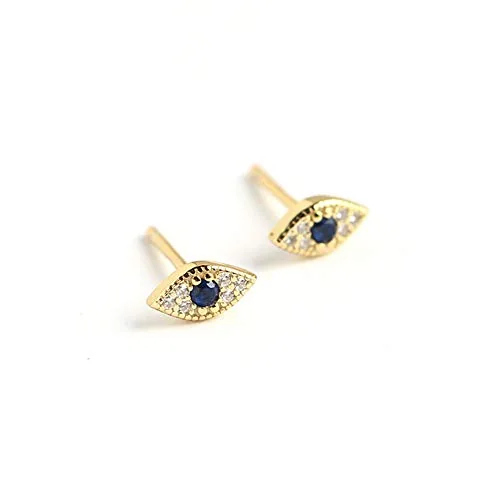
Dainty Evil Eye Mini Stud Earrings Sterling Silver Blue Crystal CZ Wedding
Sterling silver · Cubic zirconia 4.6 out of 5 (640) $11.99Earring posts, the part nobody looks at
Earrings are the one category where the metal matters more than the design, because the post spends its day inside a healed hole rather than on the surface of skin. 64 pairs of earrings are listed here and the post material is on the page wherever the maker names it.
Three metals behave in a pierced ear. Surgical stainless steel, titanium and solid gold above fourteen karat. Everything else is a bet, and the bet is lost slowly rather than immediately: irritation that comes back every time the earring goes in, and a hole that never quite settles.
Two habits matter more than the metal for anyone whose ears are difficult. Take earrings out at night, so the channel gets twelve hours of air. And clean the post with alcohol before it goes back in, because what irritates a healed piercing is usually the film on the post rather than the metal in it.
Screw-back and locking backs are the other detail worth naming. They stay on, which matters for a child and for anyone who sleeps in earrings, and they take longer to put in, which is the trade.
Cleaning without stripping
Most jewelry damage at home comes from cleaning, not from wearing.
The safe method for plated pieces is a dry soft cloth and nothing else. No ultrasonic cleaner, no jewelry dip, no toothpaste. All three remove plating, and the dip is the fastest of the three.
For sterling silver, tarnish comes off with a silver cloth or a paste made for silver. For stainless steel, warm water with a drop of washing-up liquid and a soft brush is enough, and the piece can be dried properly afterwards.
For anything with enamel or a glued stone, water is the risk rather than the chemistry. Water gets under a glued setting, sits there, and the stone is gone a week later. Wipe rather than rinse.
Brooches, most rated first
See all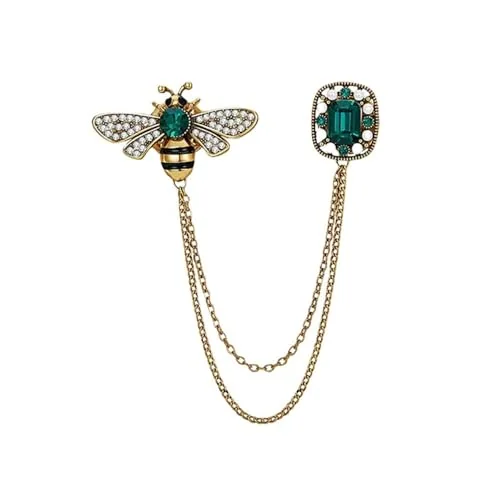
Vintage Honey Bee Brooch Pins for Women Men CZ Crystal Lapel Pin Badge Hanging
Alloy · Cubic zirconia 4.6 out of 5 (221) $7.99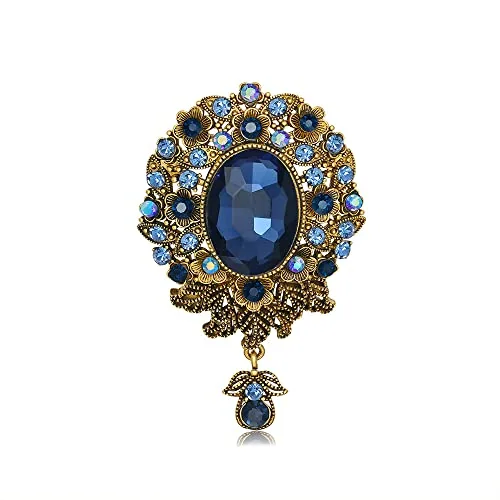
Vintage Teardrop Diamond Brooch Pin for Women Men Crystal Elegant Flower Badge
Rhinestone 4.6 out of 5 (209) $8.99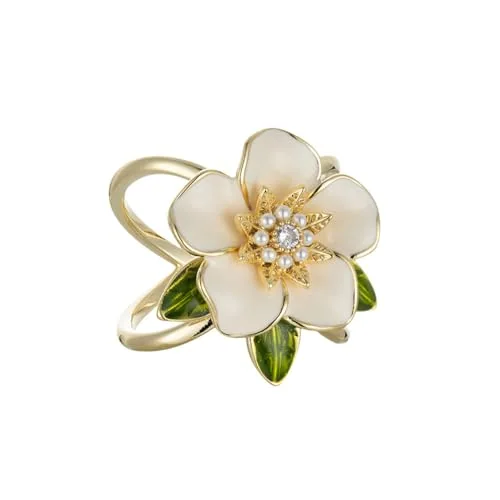
Elegant Gardenia Flower Scarf Ring for Women CZ Crystal Floral Silk Scarf Clip
Copper · Cubic zirconia 4.7 out of 5 (49) $9.99Storage, in one paragraph and one list
Air is what tarnishes silver and what oxidises copper, so the aim of storage is less air and less rubbing. Pieces in a heap scratch each other, and the softest thing in the heap loses.
- One piece per pouch or per compartment. A small zip bag per item is the cheap version and it works.
- Dry before it goes away. A piece put away after a summer evening is a piece that tarnishes in the drawer.
- Silver with an anti-tarnish strip, which costs pennies and lasts about six months.
- Enamel and set stones flat, not hanging, so nothing knocks a corner.
Do that and a plated piece worn a few times a month keeps its colour for years rather than months. That is the whole difference between costume jewelry that looks cheap and the same piece that does not.
A care calendar that fits on a postcard
Most jewelry care advice fails because it asks for a ritual. This is the version that survives contact with a normal week.
- Every day: jewelry goes on last and comes off first. Perfume, lotion and hairspray before, not after.
- Every week: a dry cloth over anything worn often. Thirty seconds a piece.
- Every season: silver gets a proper polish, steel gets warm water and a soft brush, plated pieces get a cloth and nothing else.
- Every year: check the clasps and the prongs. A prong that has lifted is a stone about to leave.
The yearly check is the one people skip and the one that saves a piece. Run a fingernail over each prong from the outside. A prong that catches is bent outwards, and it is the reason a stone falls out on a coat and is never found.
For a piece with a glued stone there is nothing to check, and there is nothing to fix either. Glue fails on its own schedule, and the useful precaution is to keep those pieces away from heat and solvents rather than to inspect them.
Water, chlorine and the sea
The three liquids that damage jewelry are not the ones people worry about.
Chlorinated water is the worst of the three. It attacks the copper in an alloy, it dulls plating quickly, and on a piece worn twice a week in a pool the plating is gone in a season. Take pieces off before a swim rather than after.
Salt water is second and works more slowly: it accelerates oxidation and it leaves crystals in every crevice. A rinse in fresh water afterwards does most of the repair.
Hot soapy water is third and the least harmful, but it is the one that loosens glue. A shower with a glued-stone piece on is how the stone leaves, and it leaves down the drain.
Stainless steel survives all three, which is the practical case for choosing it in anything worn daily.
Earrings, most rated first
See allLarge Hoop Earrings Sterling Silver 925 Circle Endless Basketball Earring
Sterling silver 4.2 out of 5 (4,299) $12.99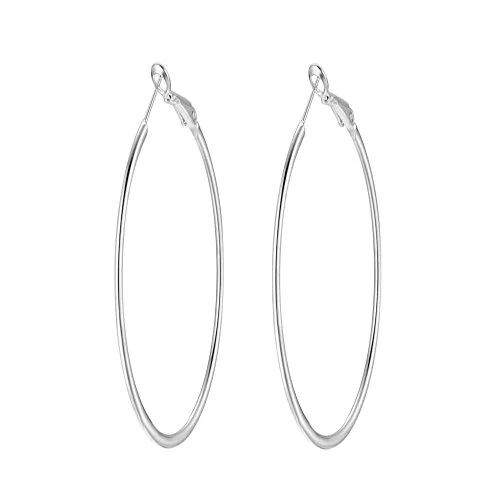
Dainty Evil Eye Mini Stud Earrings Sterling Silver Blue Crystal CZ Wedding
Sterling silver · Cubic zirconia 4.6 out of 5 (640) $11.99Where this goes next
The label guide covers what plated, filled and sterling are allowed to mean, and the guide on buying for a child covers the rules that apply when the wearer is twelve or younger, which are stricter than most people expect.
Sources we read
| Source | Published by | Read |
|---|---|---|
| 16 CFR Part 23, Guides for the Jewelry, Precious Metals, and Pewter Industries | Federal Trade Commission | 5 September 2026 |