Guide
What the words on a jewelry label are allowed to mean
Gold plated, gold filled, sterling, simulated: five words that look similar, are defined in federal rules, and mean five different things.
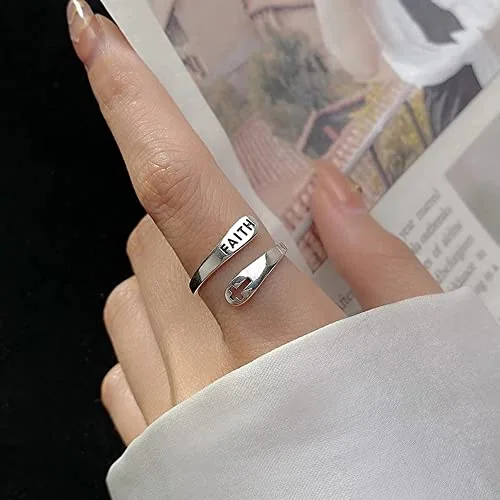
Jewelry has a vocabulary problem. Two rings can look identical in a photograph, cost ten dollars apart, and be described in words that sound the same but are not. The words are not marketing inventions. Most of them are defined in a federal guide, and knowing four or five of them settles almost every question a product description raises.
This guide sets out the definitions that matter for costume jewelry, in the order they change a decision. Every count about this range is taken from the pages on this site.
The rule underneath all the others
The Federal Trade Commission publishes guides for the jewelry trade, and the first section is the one that gives all the others their teeth:
It is unfair or deceptive to misrepresent the type, kind, grade, quality, quantity, metallic content, size, weight, cut, color, character, treatment, substance, durability, serviceability, origin, price, value, preparation, production, manufacture, distribution
Federal Trade Commission, 16 CFR Part 23, Guides for the Jewelry, Precious Metals, and Pewter Industries
That list is worth reading twice. Metallic content is in it. So is treatment, and so is durability. A maker who calls a brass ring gold, or a coated stone untreated, is not making a stylistic choice. That is misrepresenting a defined thing.
What follows are the specific rules that sit under that sentence.
Rings in this range
See all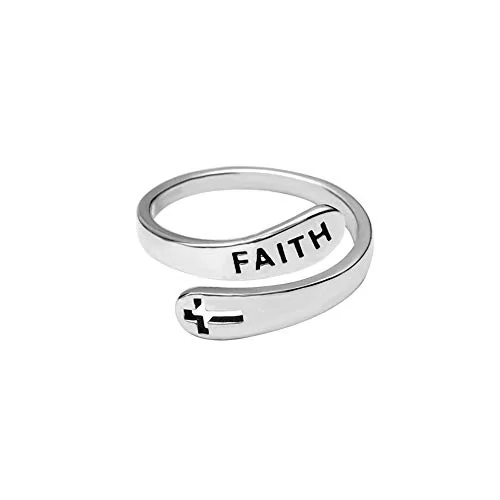

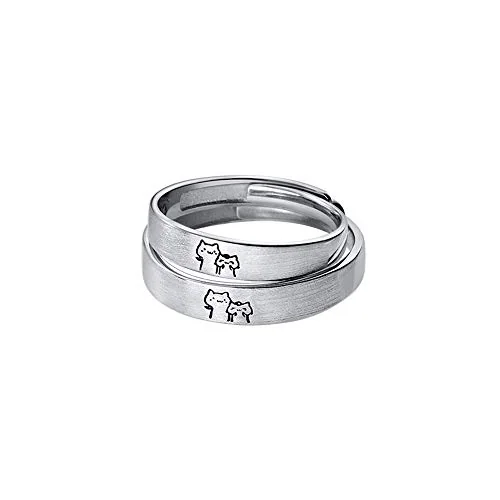
Lovely Cat His & Hers Couple Rings S925 Sterling Silver Adjustable Anniversary
Sterling silver 4.3 out of 5 (360) $29.99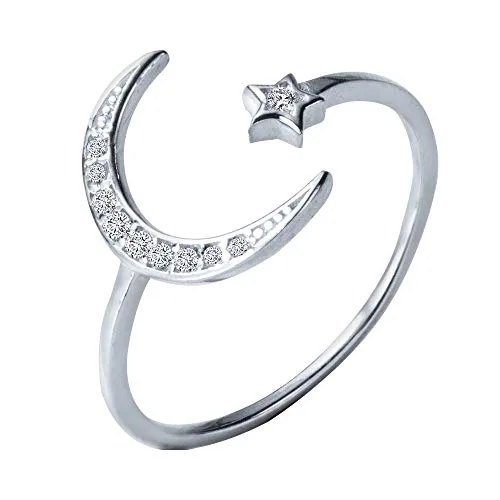
Dainty Star and Crescent Moon Open Ring 925 Sterling Silver for Women CZ
Sterling silver · Cubic zirconia 3.7 out of 5 (348) $12.99Gold, plated, filled and washed
Four terms describe gold on a piece that is not solid gold, and they are not interchangeable.
Gold plated means a layer of gold applied to a base metal. The guides do not let a maker simply call such a piece gold:
is adequately qualified to indicate that the product or part is only surface-plated
Federal Trade Commission, 16 CFR Part 23, Guides for the Jewelry, Precious Metals, and Pewter Industries
Gold electroplate is plating applied by an electrical process, and the guides tie the term to the process rather than to the look:
unless such product or part is electroplated with gold or a gold alloy
Federal Trade Commission, 16 CFR Part 23, Guides for the Jewelry, Precious Metals, and Pewter Industries
Gold filled is a different construction entirely: a layer of gold alloy mechanically bonded to a base, thicker than plating by an order of magnitude. It costs more and it lasts longer, and almost nothing in costume jewelry is gold filled.
Gold wash is the thinnest of all, and the guides single out the trick it enables. If the gold layer is covered by a base metal and then washed with gold again, that has to be disclosed:
the layer of gold plating has been covered with a base metal (such as nickel), which is covered with a thin wash of gold
Federal Trade Commission, 16 CFR Part 23, Guides for the Jewelry, Precious Metals, and Pewter Industries
In this range 10 pieces state a plating in the maker's own words, and the rest name the metal itself. The table below is the full list of metals the maker names, counted.
| Metal the maker names | Pieces |
|---|---|
| Stainless steel | 119 |
| Sterling silver | 56 |
| Alloy | 37 |
| Copper | 30 |
| Acrylic | 18 |
| Gold plated | 10 |
| Brass | 4 |
| Titanium | 4 |
Sterling is a number, not an adjective
Silver is the easiest of the precious metals to read, because the word has a fixed threshold:
unless it is at least 925/1,000ths pure silver
Federal Trade Commission, 16 CFR Part 23, Guides for the Jewelry, Precious Metals, and Pewter Industries
That is where the 925 stamp comes from. Nine hundred and twenty five parts silver in a thousand, with the balance usually copper for hardness. In this range 56 pieces state sterling silver.
Two neighbouring phrases mean less than they sound. Silver plated is a coating over a base metal, and silver tone means the colour and nothing else. Neither is silver in the sense the guides use.
Stainless steel is the other honest workhorse and the most common metal here: 119 pieces state it. It is not precious, it does not tarnish, and for anything that sits against skin all day it outperforms plated brass by a wide margin.
Pieces that state sterling silver
See all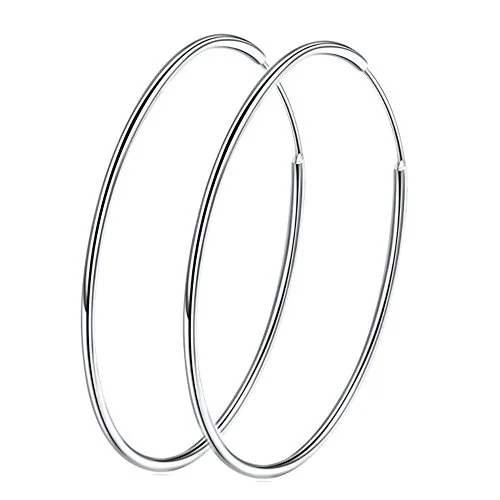
Large Hoop Earrings Sterling Silver 925 Circle Endless Basketball Earring
Sterling silver 4.2 out of 5 (4,299) $12.99Faith Cross Sterling Silver Open Statement Rings Adjustable Minimalist Hope
Sterling silver 4.4 out of 5 (1,661) $18.99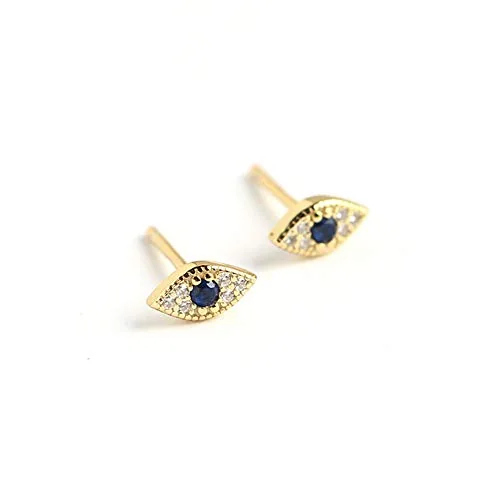
Dainty Evil Eye Mini Stud Earrings Sterling Silver Blue Crystal CZ Wedding
Sterling silver · Cubic zirconia 4.6 out of 5 (640) $11.99Stones, simulated and created
The stone vocabulary splits three ways and the split matters more than the words suggest.
- Natural means dug out of the ground. Almost nothing in costume jewelry is.
- Laboratory created means the same chemistry as the natural stone, grown rather than mined. A created sapphire is a sapphire.
- Simulated or imitation means something that looks like the stone and is not it. A simulated pearl is glass or plastic with a coating.
Cubic zirconia belongs to none of those three. It is its own material, a zirconium oxide crystal grown for the purpose, and it is the most common stone in this catalogue: 211 pieces state it. It is harder than glass, it holds a facet, and under a loupe it is not a diamond.
Simulated pearl appears on 39 pieces here and enamel on 41. Enamel is the one that behaves differently from every other setting: it is glass fused to metal, it chips rather than scratches, and a chipped enamel wing on a brooch cannot be repaired at this price.
| Stone or setting | Pieces |
|---|---|
| Cubic zirconia | 211 |
| Enamel | 41 |
| Simulated pearl | 39 |
| Rhinestone | 21 |
| Turquoise | 9 |
| Crystal | 7 |
| Resin | 6 |
| Tiger eye | 5 |
| Opal | 5 |

Pearl is a protected word too
Pearls have their own set of sections in the guides, and the reason is that a convincing imitation costs almost nothing to make. The rule requires the qualifier to sit next to the word and to be as visible as it is:
so as to indicate definitely and clearly that the product is not a pearl
Federal Trade Commission, 16 CFR Part 23, Guides for the Jewelry, Precious Metals, and Pewter Industries
The mechanism is worth understanding because it explains the phrasing you see everywhere. A qualifier in small grey type under a headline that says pearl does not meet the standard. It has to be immediately before the word and equally conspicuous:
imitation pearl unless it is immediately preceded, with equal conspicuousness, by the word
Federal Trade Commission, 16 CFR Part 23, Guides for the Jewelry, Precious Metals, and Pewter Industries
Every pearl in this range is a simulated one and the pages say so. 39 pieces state simulated pearl, which in practice is a glass or resin bead with a coating of pearl essence. It behaves like glass: it chips rather than dents, and the coating wears at any point that rubs.
Two terms the guides call out by name are worth recognising in the wild. Faux pearl and fashion pearl both sound like categories and are neither. They describe an imitation, and the rule treats them as qualifiers that must be used honestly rather than as a way around the word.
Necklaces, most rated first
See all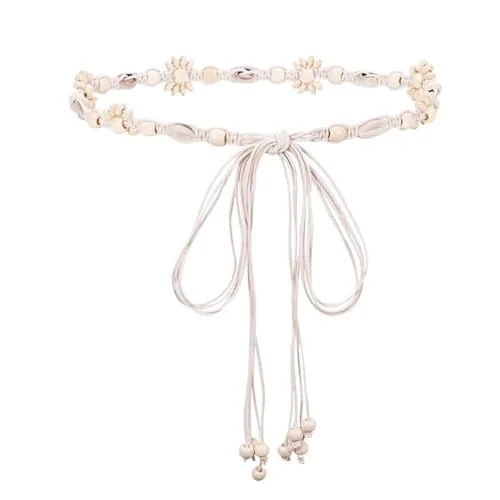
Boho Braided Waist Chain Belt Shell Flower Woven Belts with Tassels Bohemian
4.5 out of 5 (25) $8.99
Treatment, and the silence around it
Almost every coloured stone on the market has been treated in some way: heated to deepen a colour, filled to hide a fracture, dyed, or coated. The guides require the ones that matter to be disclosed, because a treatment changes both value and care.
The general prohibition is the one to remember, and it covers treatment explicitly:
It is unfair or deceptive to misrepresent the type, kind, grade, quality, quantity, metallic content, size, weight, cut, color, character, treatment, substance, durability, serviceability, origin, price, value, preparation, production, manufacture, distribution
Federal Trade Commission, 16 CFR Part 23, Guides for the Jewelry, Precious Metals, and Pewter Industries
For costume jewelry the practical version is short. Colour that comes from a coating wears off at the edges. Colour that comes from the material itself does not. A coated stone should not go near an ultrasonic cleaner, and neither should a filled one.
Where the maker names a stone here, the page repeats the name and nothing more. Where the description says only stone or crystal, that is what the page says, because inventing a species would be exactly the misrepresentation the section above describes.
What a stamp inside a band means
A mark stamped inside a ring or on a clasp is a quality mark, and there are only a handful worth recognising.
- 925 or STER is sterling silver, at least 925 parts per thousand.
- 750, 585, 375 are gold in parts per thousand: eighteen, fourteen and nine karat.
- GP, GEP, HGE mean gold plated, gold electroplated and heavy gold electroplate. All three are coatings.
- GF with a fraction, such as 1/20 12K GF, is gold filled and states the weight ratio of the gold layer.
- No mark at all is the norm in costume jewelry and says nothing either way.
The mark is not a guarantee on its own, because a mark can be applied by anyone. It is a claim, and the sections above are what make a false one actionable rather than merely rude.
Reading a description in thirty seconds
The words above turn a product description into a short checklist. In order of how much they change the answer:
- What is the body of the metal? Steel, brass, copper, silver. Everything else is a coating on one of those.
- Is a plating named? If yes, the piece is base metal underneath, whatever the colour.
- What is the stone called? Simulated, created and cubic zirconia are three different answers.
- Is there enamel? If yes, treat the piece as chippable.
- Does the description say nothing at all? Then the honest reading is that the maker did not state it, not that the answer is good.
That last line is the one worth keeping. On this site a page that does not name a metal is a page where the maker did not name one, and we leave the line out rather than filling it with a plausible word.
What the price actually tells you
The range here runs from $2.99 upwards, and price is a weak signal about material at this level. A stainless steel ring and a plated brass ring can carry the same figure, and the steel one will outlive the other by years.
Price is a better signal about two other things. It tracks the amount of hand work in a piece, so a brooch with forty set stones costs more than a plain band. It also tracks the size of the run, and a seasonal piece made once is dearer than a staple made continuously.
The practical rule is to read the metal line first and the price second. If the metal is not named anywhere, the price is telling you nothing at all.
Most rated in the range
See allLarge Hoop Earrings Sterling Silver 925 Circle Endless Basketball Earring
Sterling silver 4.2 out of 5 (4,299) $12.99
Faith Cross Sterling Silver Open Statement Rings Adjustable Minimalist Hope
Sterling silver 4.4 out of 5 (1,661) $18.99Four words that mean less than they look
Some words in jewelry descriptions carry no fixed definition at all. They are not forbidden, and they are not information either.
Tone. Gold tone and silver tone are colour words. They say nothing about the metal underneath, and they are the honest way to describe a finish when no precious metal is present.
Vermeil is the one exception in that family and it is defined: sterling silver with a gold layer of a stated thickness. It is rare in costume jewelry and worth noticing when it appears.
Hypoallergenic has no jewelry definition at all. Two sellers can use it for two different alloys, and neither is wrong because there is nothing to be wrong about. The useful line is the metal itself.
Nickel free is a claim about a specific metal and it is checkable, which makes it more useful than the word above. It is also the claim most often applied to a plated piece where only the top layer is nickel free.
None of those four should end a decision. The metal line and the stone line should.
How this range reads against those rules
The catalogue here runs to 524 pieces, and the honest summary is that it is costume jewelry that names its materials. 119 pieces state stainless steel, 56 state sterling silver, 34 state brass or copper, and 10 state a plating.
On the stone side 211 pieces state cubic zirconia, 41 state enamel and 39 state simulated pearl. None of the pages here claim a natural gemstone, because none of the descriptions do.
What the range does not have is a hallmark on most pieces, a lab report on any piece, or a warranty beyond the one the retail partner gives at checkout. Those absences are normal at this price and worth saying once rather than implying by silence.
Pieces that state stainless steel
See all
Where this goes next
Two more guides here carry the rest of it. The guide on metal against skin covers what plated brass does over a year of wear and why some people go green. The guide on buying for a child covers the lead rules and the small parts problem, which are the two things that make jewelry for children a different purchase entirely.
Sources we read
| Source | Published by | Read |
|---|---|---|
| 16 CFR Part 23, Guides for the Jewelry, Precious Metals, and Pewter Industries | Federal Trade Commission | 5 September 2026 |